Yes, it is legal to record someone in public in India, provided the recording does not violate privacy rights, cause harm, or breach specific laws. Public spaces generally have a lower expectation of privacy, making it permissible to record individuals in such settings under normal circumstances. However, using such recordings without consent or for illegal purposes may attract legal consequences.
Legal Framework Governing Public Recording in India
The legality of recording someone in public is guided by constitutional principles, privacy laws, and specific provisions under the Indian Penal Code (IPC) and the Information Technology Act, 2000.
1. Right to Privacy
Constitutional Protection:
- The Supreme Court of India, in the landmark Puttaswamy case (2017), recognized the Right to Privacy as a fundamental right under Article 21 of the Constitution.
- This right extends to individuals in public spaces if the recording intrudes into their private life or is used without consent in a way that violates their dignity or autonomy.
Expectation of Privacy in Public Spaces:
- While public spaces generally reduce the expectation of privacy, certain actions (e.g., secretly recording intimate moments) are considered violations of privacy even in public.
2. Indian Penal Code (IPC)
Section 354C (Voyeurism):
- Recording someone, particularly a woman, in a way that invades their privacy (e.g., without consent while engaging in a private act) is a criminal offense.
- Penalty: Imprisonment of up to 3 years for the first offense and up to 7 years for subsequent offenses, along with a fine.
Section 499 (Defamation):
- If the recording is shared or published in a way that harms a person’s reputation, it can lead to defamation charges.
Section 503 (Criminal Intimidation):
- Using recordings to threaten or intimidate someone is a punishable offense.
3. Information Technology Act, 2000
Section 66E (Violation of Privacy):
- Capturing or sharing images of a person’s private parts without their consent is a punishable offense, even in public spaces.
- Penalty: Imprisonment of up to 3 years or a fine of up to ₹2 lakh, or both.
Section 67:
- Publishing or transmitting obscene content captured through public recordings is prohibited and can attract penalties.
When Is Recording in Public Permissible?
For Public Interest:
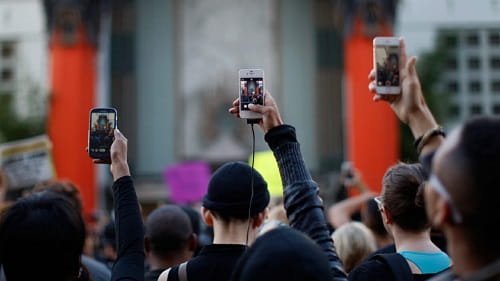
- Recording events of public significance, such as protests, accidents, or crimes, is generally permissible if done responsibly.
For Documentation or Evidence:
- Public recordings used as evidence to report crimes or document incidents are legal, provided they do not violate privacy or defame individuals.
For Journalism:
- Journalists and media personnel can record in public for news reporting, adhering to ethical and legal guidelines.
Consensual Recording:
- Recording with the subject’s consent in a public space is always permissible.
When Is Recording in Public Illegal?
Intrusive Recordings:
- Recording individuals in ways that intrude into their personal or intimate moments, even in public spaces, is illegal.
Commercial Exploitation:
- Using recordings of individuals without consent for commercial purposes (e.g., advertisements) can lead to legal action under privacy and intellectual property laws.
Defamatory or Malicious Use:
- Sharing or editing recordings to harm someone’s reputation, intimidate, or spread misinformation is prohibited.
Sensitive Locations:
- Recording in restricted areas, such as government buildings, military zones, or courts, is illegal without proper authorization.
Penalties for Illegal Recording
Under IPC and IT Act:
- Imprisonment ranging from 3 to 7 years.
- Fines up to ₹2 lakh or more, depending on the offense.
Civil Liability:
- Victims can file civil suits seeking compensation for damages caused by unauthorized recording or use.
Practical Tips for Recording in Public Legally
- Avoid Intrusion: Do not record individuals in a way that invades their privacy, even if they are in a public space.
- Seek Consent: Always obtain consent before recording someone, especially for interviews or personal moments.
- Respect Sensitive Locations: Refrain from recording in areas where recording is explicitly prohibited.
- Use for Legitimate Purposes: Ensure the recordings are used responsibly and do not harm or defame anyone.
Recent Developments
Rising Awareness of Privacy Rights:
- Increased awareness of privacy laws has led to greater scrutiny of unauthorized recordings and their misuse.
Social Media Concerns:
- Platforms like Instagram and TikTok have seen misuse of public recordings, leading to debates on stricter regulations.
Technology Advancements:
- Widespread availability of smartphones has increased public recordings, prompting discussions on balancing accountability with privacy rights.
Conclusion
Recording someone in public is legal in India under normal circumstances, but it must respect privacy rights and adhere to legal and ethical standards. While public spaces reduce the expectation of privacy, intrusive, defamatory, or malicious recordings can lead to serious legal consequences. To avoid complications, it is essential to record responsibly, seek consent where needed, and use recordings for legitimate purposes.

Hina Abbasi is Editor and a passionate sports and entertainment content writer at WinnersMaze.com. Hina’s expertise spans across a wide range of sports, and interest in many TV shows allowing her to deliver insightful analysis and compelling stories that resonate with readers.