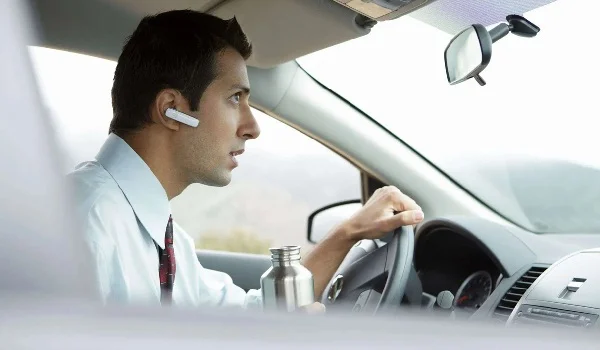
Yes, it is legal to talk on Bluetooth while driving in India, provided it does not distract the driver or compromise road safety. However, even hands-free phone use must be done responsibly, as distracted driving is a punishable offense under the Motor Vehicles Act, 1988.
Legal Framework Governing Bluetooth Use While Driving
1. Motor Vehicles Act, 1988
- Section 184: Penalizes driving dangerously or recklessly. If talking on Bluetooth distracts the driver, leading to dangerous driving, it can attract penalties.
- Section 177: Imposes fines for general traffic rule violations, including actions that could compromise safe driving.
2. Supreme Court Guidelines
- The Supreme Court Committee on Road Safety emphasizes avoiding distractions while driving. Although the law permits hands-free devices, any activity that impairs driver concentration can be considered unsafe.
3. IT Act, 2000
- The Information Technology Act does not specifically address Bluetooth use while driving but supports the principle of minimizing distractions in all digital communications.
Permissible Use of Bluetooth Devices While Driving
1. Hands-Free Communication
- Drivers can use Bluetooth-enabled devices like headsets or in-car systems for communication as long as their hands remain free for vehicle control.
2. Navigation Assistance
- Bluetooth devices connected to GPS systems are commonly used for navigation. This is legal, provided it does not require constant interaction.
Risks and Challenges
1. Cognitive Distraction
- Even hands-free conversations can divert attention from the road, increasing the likelihood of accidents. Cognitive distractions are a leading cause of road mishaps.
2. Multitasking
- Interacting with Bluetooth systems, such as dialing or managing calls, can momentarily distract drivers, which is considered unsafe.
3. Legal Ambiguity
- While the law does not explicitly prohibit Bluetooth use, its misuse leading to distraction or reckless driving is punishable. Enforcement largely depends on the interpretation of “safe driving” by law enforcement officers.
Penalties for Violating Traffic Rules While Using Bluetooth
1. Dangerous Driving
- Fine: ₹1,000 to ₹5,000.
- Imprisonment: Up to six months for the first offense and up to one year for subsequent offenses.
2. Distracted Driving
- Fine: ₹500 for first-time offenses under Section 177, with higher penalties for repeat violations.
- Vehicle impoundment or suspension of driving license may occur in extreme cases.
Recommendations for Safe Use of Bluetooth While Driving
1. Minimize Conversations
- Keep calls brief and avoid discussions that require significant mental focus.
2. Avoid Manual Interaction
- Set up Bluetooth connections or navigation systems before starting the journey to avoid manual operation while driving.
3. Pull Over for Extended Calls
- For longer or urgent calls, stop the vehicle in a safe location to avoid distractions.
4. Regular Maintenance
- Ensure Bluetooth devices and in-car systems are functioning properly to prevent technical glitches while driving.
Global Perspective
1. United States
- Many states allow hands-free phone use but penalize distracted driving. Some states have stricter bans on any form of phone interaction.
2. United Kingdom
- Using hands-free devices is legal, but drivers can face penalties if they are deemed distracted or if the use of such devices leads to unsafe driving.
3. Australia
- Strict guidelines regulate the use of hands-free systems, emphasizing driver focus and minimal manual interaction.
Conclusion
Talking on Bluetooth while driving is legal in India, but drivers must exercise caution and avoid distractions. Responsible use of hands-free devices ensures compliance with traffic laws and promotes road safety. Drivers should prioritize full concentration on the road to prevent accidents and legal consequences.

Hina Abbasi is Editor and a passionate sports and entertainment content writer at WinnersMaze.com. Hina’s expertise spans across a wide range of sports, and interest in many TV shows allowing her to deliver insightful analysis and compelling stories that resonate with readers.