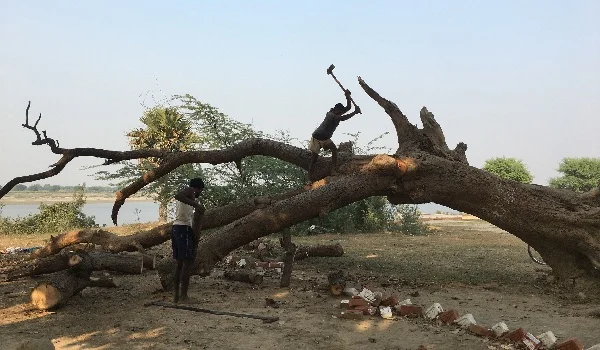
Trees are vital to the environment, providing oxygen, maintaining biodiversity, and supporting the ecosystem. In India, the importance of conserving forests and trees is enshrined in legal frameworks that strictly regulate the cutting of trees. These laws aim to strike a balance between development and environmental preservation, imposing penalties on unauthorized deforestation and tree felling. Here’s an overview of the laws against cutting trees in India.
1. Constitutional Provisions
The Indian Constitution provides a foundational basis for environmental protection, including the preservation of trees:
- Article 48A: Directs the State to protect and improve the environment and safeguard forests and wildlife.
- Article 51A(g): Imposes a fundamental duty on every citizen to protect and improve the natural environment, including forests, rivers, and wildlife.
2. The Forest (Conservation) Act, 1980
The Forest (Conservation) Act, 1980 is one of the most critical laws regulating deforestation in India.
Provisions:
- Prior approval of the Central Government is required for using forest land for non-forest purposes.
- Cutting trees in forest areas without permission is prohibited.
- Violators can face imprisonment of up to six months or a fine or both.
- Objective: Prevent deforestation and encourage afforestation to balance ecological systems.
3. The Indian Forest Act, 1927
This colonial-era law, though amended several times, continues to regulate tree felling and forest use:
Provisions:
- Cutting or removing trees from reserved forests or protected areas requires permission from the Forest Department.
- Unauthorized felling can result in fines and imprisonment.
- Grazing, quarrying, and other activities in reserved forests are also restricted.
Punishment: Violators can face imprisonment of up to two years or fines, or both.
4. The Environment Protection Act, 1986
The Environment Protection Act, 1986 is a broad legislation that empowers the Central Government to take measures for environmental protection:
Relevance to Tree Cutting:
- Cutting trees that harm the environment without clearance is considered an offense under this Act.
- It provides for penalties, including imprisonment of up to five years or fines, or both.
5. The Wildlife Protection Act, 1972
This Act indirectly addresses tree cutting by protecting habitats in wildlife sanctuaries and national parks:
Provisions:
- Felling trees in areas designated as wildlife habitats is prohibited.
- Offenders can face stringent penalties, including imprisonment and fines.
6. State-Specific Tree Protection Acts
Many Indian states have their own laws to regulate tree cutting:
- Maharashtra: The Maharashtra (Urban Areas) Protection and Preservation of Trees Act, 1975 mandates that prior permission is needed to cut trees in urban areas. The Act also requires compensatory planting.
- Delhi: The Delhi Preservation of Trees Act, 1994 prohibits the felling of trees without the approval of the concerned Tree Officer.
- Karnataka: The Karnataka Preservation of Trees Act, 1976 restricts tree cutting and mandates planting saplings as compensation.
7. Court Rulings on Tree Cutting
Indian courts have delivered landmark judgments emphasizing the importance of trees:
- In the T.N. Godavarman Thirumulpad v. Union of India case, the Supreme Court expanded the definition of “forest” to include not just forest lands but also areas with forest cover, thereby increasing protection for trees.
- The MC Mehta v. Kamal Nath case reiterated the principle of sustainable development and environmental conservation.
8. The Air (Prevention and Control of Pollution) Act, 1981
Although primarily aimed at controlling air pollution, this Act highlights the role of trees in maintaining air quality. Cutting trees that significantly contribute to pollution control may invite penalties.
9. Municipal Laws
Urban local bodies often regulate tree cutting in municipal areas:
- Individuals or organizations must obtain permission from municipal authorities before felling trees.
- Non-compliance can result in fines, imprisonment, or both.
10. Penalties for Unauthorized Tree Cutting
The penalties for unauthorized tree felling vary depending on the applicable law:
- Fines ranging from ₹5,000 to ₹1,00,000.
- Imprisonment ranging from six months to five years.
- Mandatory planting of saplings as compensatory afforestation.
11. Exceptions to Tree Cutting Laws
In certain cases, permission may be granted for cutting trees:
- Development projects (roads, buildings, etc.) with environmental clearance.
- Removal of dead, diseased, or dangerous trees.
- Felling trees on private land, subject to local laws and regulations.
12. Challenges in Enforcement
Despite strict laws, enforcement faces several challenges:
- Lack of awareness among the public about tree protection laws.
- Illegal felling by timber mafias in remote areas.
- Weak monitoring and corruption in some regions.
- Delays in afforestation efforts to compensate for deforestation.
13. The Way Forward
To strengthen tree conservation in India:
- Awareness Campaigns: Educate citizens about the importance of trees and relevant laws.
- Technology Use: Employ satellite imagery and drones for real-time monitoring of forest areas.
- Community Participation: Encourage local communities to participate in forest conservation.
- Stringent Penalties: Increase fines and implement stricter penalties for violators.
- Afforestation Drives: Promote tree-planting initiatives as compensatory measures for permitted tree cutting.
Conclusion
India’s legal framework against tree cutting is comprehensive and aimed at balancing environmental conservation with developmental needs. However, effective enforcement, public awareness, and active participation are crucial to ensure these laws fulfill their purpose. Protecting trees is not just a legal obligation but a moral and ecological responsibility to ensure a sustainable future for generations to come.

Hina Abbasi is Editor and a passionate sports and entertainment content writer at WinnersMaze.com. Hina’s expertise spans across a wide range of sports, and interest in many TV shows allowing her to deliver insightful analysis and compelling stories that resonate with readers.