Excessive noise can disrupt the peace, cause stress, and infringe on an individual’s right to a comfortable living environment. In India, laws are in place to address and regulate noise pollution, including that caused by noisy neighbors. These laws aim to strike a balance between personal freedom and societal harmony. This article outlines the legal framework and remedies available to deal with noisy neighbors in India.
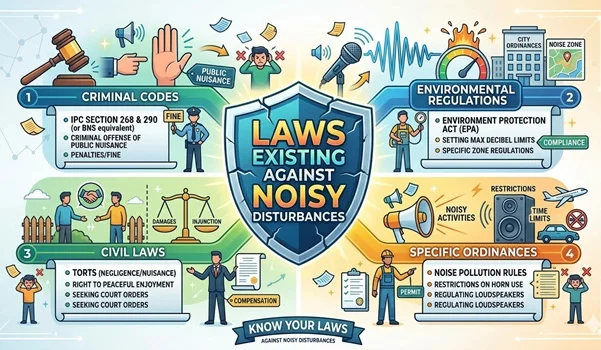
1. The Legal Framework for Noise Pollution
Noise pollution is primarily governed by environmental laws in India, supplemented by provisions in the Indian Penal Code (IPC) and local municipal rules. The following are the key laws addressing noise pollution:
a. The Noise Pollution (Regulation and Control) Rules, 2000
These rules, framed under the Environment Protection Act, 1986, specifically address noise pollution:
Provisions:
- Defines permissible noise levels for different areas:
- Residential areas: 55 dB (day) and 45 dB (night).
- Commercial areas: 65 dB (day) and 55 dB (night).
- Restricts the use of loudspeakers, musical instruments, and sound-emitting devices in residential areas, especially during nighttime (10:00 PM to 6:00 AM).
- Allows state governments to take measures to ensure compliance.
- Enforcement: Local police and pollution control boards are responsible for monitoring and enforcement.
b. The Indian Penal Code, 1860
The IPC includes provisions to address noise-related disturbances:
- Section 268: Defines public nuisance as an act that causes annoyance to the public or a section of it.
- Section 290: Imposes a fine of up to ₹200 for public nuisance.
- Section 291: Deals with continuing public nuisance, prescribing stricter penalties.
c. The Code of Criminal Procedure, 1973
The Code of Criminal Procedure (CrPC) empowers authorities to address noise complaints:
- Section 133: Allows a magistrate to pass orders to prevent public nuisance, including excessive noise. Neighbors can approach a magistrate if noise persists despite warnings.
d. The Environmental Protection Act, 1986
This act provides the framework for addressing and penalizing environmental violations, including noise pollution. Authorities can issue notices and impose penalties for non-compliance.
e. Municipal Laws and Local Bylaws
Municipal corporations often have specific rules to control noise in residential areas:
- Restrict noise from construction, parties, and celebrations during specific hours.
- Levy fines for violations.
2. Remedies for Noisy Neighbours
If a neighbor is causing excessive noise, the following remedies are available:
a. Filing a Police Complaint
- Individuals can file a complaint with the local police, who are empowered to take action under the Noise Pollution Rules and IPC.
- Police can issue warnings, impose fines, or seize sound equipment in extreme cases.
b. Approaching the Pollution Control Board
- Complaints can be filed with the State Pollution Control Board for persistent noise violations.
- Boards are authorized to investigate and take corrective measures.
c. Using Section 133 of CrPC
- A magistrate can be approached to issue a notice to the noisy neighbor, directing them to stop the nuisance. Failure to comply can lead to stricter action.
d. Civil Remedies
- A civil suit can be filed against the neighbor for damages or an injunction to stop the noise.
- Courts can grant relief if the noise affects health, peace, or property value.
e. Alternative Dispute Resolution
- Mediation and negotiation can be effective in resolving disputes amicably without involving legal proceedings.
3. Penalties for Non-Compliance
The penalties for violating noise pollution regulations include:
- Fine: Up to ₹1,00,000 under the Environmental Protection Act.
- Seizure of Equipment: Police may confiscate sound equipment causing noise pollution.
- Imprisonment: For repeated violations, imprisonment of up to five years may be imposed.
4. Exceptions to Noise Restrictions
Certain activities may be exempt from noise restrictions under specific conditions:
- Festivals and religious events, subject to prior permission from local authorities.
- Emergency services like ambulances and fire trucks.
However, these exemptions do not apply during prohibited hours (10:00 PM to 6:00 AM).
5. Challenges in Enforcement
Despite comprehensive laws, challenges persist in addressing noise pollution:
- Lack of Awareness: Many citizens are unaware of permissible noise limits and legal remedies.
- Reluctance to Report: People may hesitate to report noisy neighbors due to social stigma or fear of retaliation.
- Inconsistent Enforcement: Authorities may lack resources or overlook violations.
6. Tips for Dealing with Noisy Neighbours
- Communicate: Politely discuss the issue with your neighbor and explain how the noise affects you.
- Document Evidence: Record instances of noise, including dates, times, and decibel levels, to strengthen your case.
- Seek Mediation: Engage a neutral third party or local Resident Welfare Association (RWA) to mediate the dispute.
- File a Complaint: If the problem persists, approach the police or magistrate with evidence.
7. The Way Forward
To effectively combat noise pollution and ensure peaceful living:
- Awareness Campaigns: Educate citizens about noise pollution laws and permissible noise levels.
- Community Engagement: Encourage RWAs and neighborhood associations to address noise complaints collaboratively.
- Strict Enforcement: Strengthen monitoring and penalties to deter violations.
Conclusion
India’s laws against noise pollution provide a robust framework to address the issue of noisy neighbors. However, the effectiveness of these laws depends on public awareness and proactive enforcement. A harmonious living environment requires mutual respect and cooperation, underscoring the importance of balancing personal freedom with collective well-being. If noise issues persist, legal remedies ensure that individuals have the means to protect their right to peace and tranquility.

Hina Abbasi is Editor and a passionate sports and entertainment content writer at WinnersMaze.com. Hina’s expertise spans across a wide range of sports, and interest in many TV shows allowing her to deliver insightful analysis and compelling stories that resonate with readers.